Finding Solitary Black Holes Changes Everything We Know About Supernovas

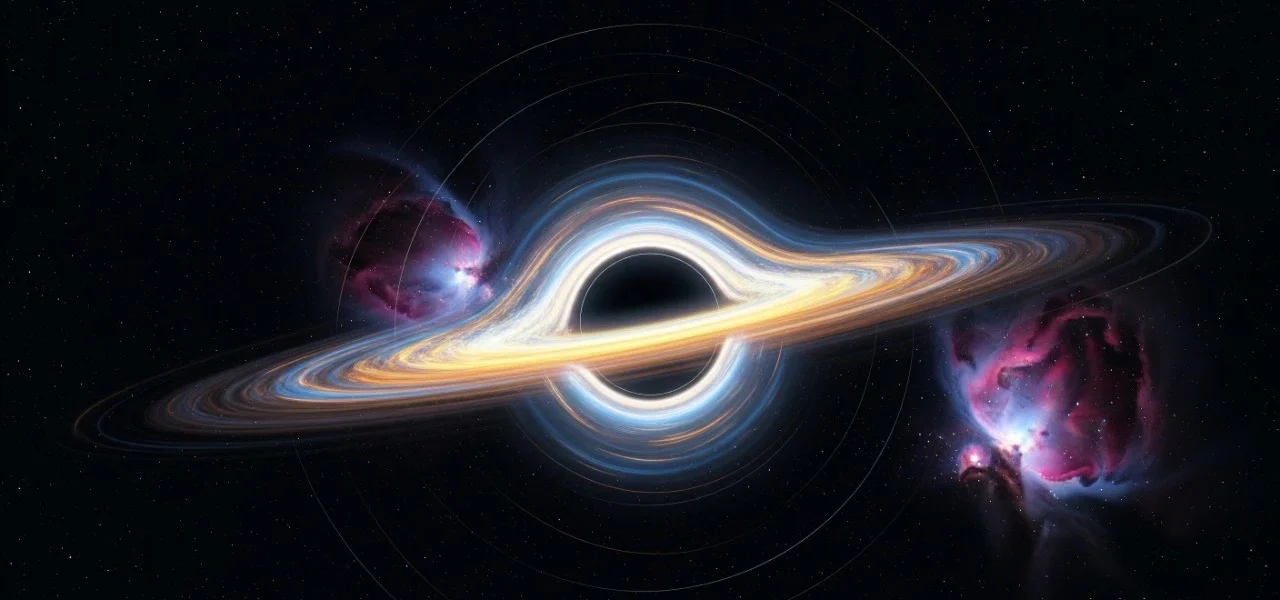
For decades, black holes were like celebrities: we only ever saw them when they were “making a scene.” We found them because they were devouring a nearby star, glowing with a violent light, or crashing into another black hole and sending ripples through space-time. But for every “famous” black hole we’ve found, scientists knew there had to be millions of others—quiet, lonely, and completely invisible—drifting through the dark.
A landmark study published in PNAS has finally pulled back the curtain on these “Lone Black Holes.” By tracking how these invisible giants warp the light of distant stars, researchers are gaining fresh insights into the final, dramatic moments of the most massive stars in the universe.
The Problem: A Missing Chapter in Cosmic History
When a massive star (much larger than our Sun) runs out of fuel, it dies in a spectacular explosion called a supernova. What’s left behind is a black hole. However, our current maps of the galaxy are missing most of these “corpses.”
Previously, we only found black holes in “binary systems”—where a black hole is paired with a living star. But studying only binary black holes is like trying to understand human history by only looking at married couples. It doesn’t give you the full picture. Many stars live and die alone, and until now, their fate was a total mystery.
The Discovery: Gravitational “Lensing”
How do you find something that emits no light and has no neighbors? You look for the “ripple.”
Using a technique called gravitational microlensing, scientists watched for instances where a background star’s light suddenly brightened and distorted for no apparent reason. This happens because the gravity of a passing lone black hole acts like a giant magnifying glass, bending the light from the star behind it.
By measuring these “warps” in space, researchers can finally weigh these lone wanderers. This data is the “smoking gun” that tells us how big the original star was and exactly how much force was involved in its death.
Why This Changes Your View of the Universe
This research isn’t just about cataloging dark spots in space; it changes how we understand the very matter we are made of.
-
The Supernova Mystery: By studying lone black holes, we can figure out which stars “fail” to explode and just collapse silently, and which ones go out with a bang. This tells us how elements like gold, silver, and oxygen are scattered across the galaxy—the same elements that eventually make up planets and people.
-
The Galaxy’s Weight: We can finally get an accurate “census” of the Milky Way. Knowing how many lone black holes are out there helps us understand the total mass of our galaxy and how it will evolve over billions of years.
-
A Safer Map: While these black holes are far away, understanding their population helps us map the gravitational “terrain” of our cosmic neighborhood.
For the average person, this discovery is a reminder that we are living in a “second age of discovery.” Just as early explorers mapped the hidden continents of Earth, modern astronomers are mapping the “dark” contents of our galaxy.
We are learning that the space between the stars isn’t empty; it is filled with the silent, heavy remains of the ancient past. These lone black holes are the “ghosts” of the stars that paved the way for our own Sun. By understanding their fate, we are ultimately learning about the origins of everything we see around us.