New Breakthrough Allows Doctors to Turn Human T-Cells Into Cancer-Hunters Without Surgery
For years, the “holy grail” of cancer treatment has been a process called CAR-T therapy. In simple terms, doctors take your blood, send it to a high-tech lab, “reprogram” your immune cells (T-cells) to recognize cancer, and then pump them back into your body. It works like magic for some, but it has a massive problem: it is incredibly expensive, takes weeks to prepare, and requires a grueling process for the patient.
However, a groundbreaking study published in Nature has just changed the game forever. Scientists have found a way to skip the lab entirely. They have developed a method to reprogram your T-cells directly inside your body (in vivo).
How Does It Work?
Imagine your immune system is a police force that has “forgotten” what the villain looks like. Previously, we had to take the officers out of the city, put them through a months-long training camp, and then send them back in.
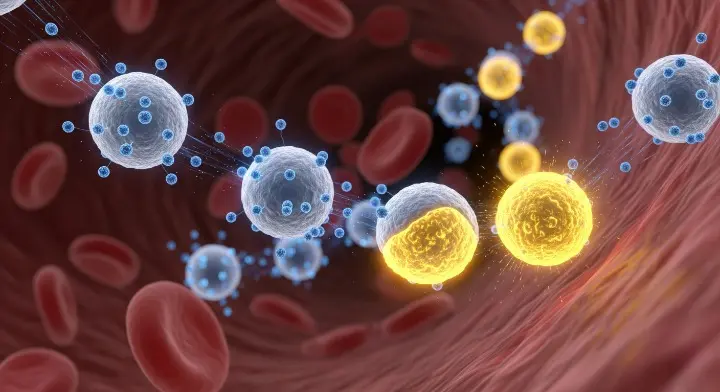
With this new “site-specific engineering,” scientists use specialized nanoparticles—tiny, microscopic delivery vehicles—that are injected into the bloodstream. These particles are like “smart-instruction manuals.” They are programmed to find T-cells and only T-cells. Once they latch on, they “edit” the cell’s DNA on the spot, giving it a new set of instructions: “Find the cancer, and destroy it.”
Why This Changes Everything
This discovery isn’t just a small step; it’s a giant leap for human health for three main reasons:
-
Instant Access: Instead of waiting weeks for a lab to grow your cells, a patient could potentially receive an injection and start fighting the disease within hours.
-
Safety and Precision: Because the engineering is “site-specific,” the instructions only go where they are intended. This reduces the “friendly fire” side effects that make traditional treatments like chemotherapy so devastating to the body.
-
Affordability: By removing the need for billion-dollar laboratory facilities to process every single patient’s blood, this technology could make life-saving “living cures” available to everyone, not just the ultra-wealthy.
The implications go far beyond cancer. If we can reprogram T-cells inside the body, we can potentially “turn off” autoimmune diseases like Lupus or Multiple Sclerosis, where the immune system attacks the body by mistake. We could “teach” the body to accept a transplanted organ without needing lifetime supplies of anti-rejection drugs.
We are moving toward a future where “getting sick” doesn’t mean a battle against toxic chemicals, but rather a simple “software update” for your biological systems. Your body has always had the power to heal; science has just finally figured out how to give it the right directions.