Scientists found that a Parkinson’s drug significantly improves the depression symptom that current antidepressants barely touch, and brain scans show exactly why

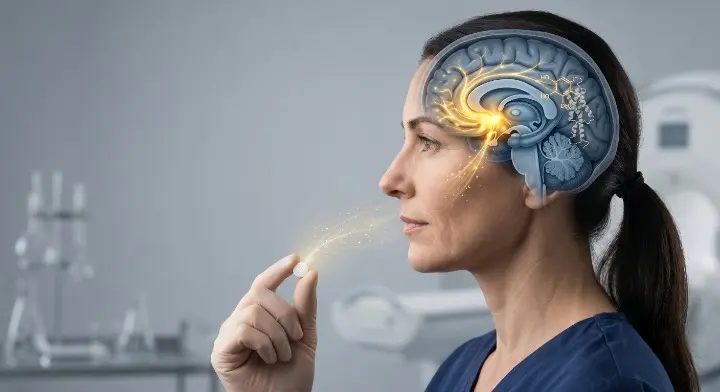
Depression is usually described as feeling sad. For a large portion of people living with it, that description misses the part that hurts the most. They do not necessarily feel sadness. They feel nothing. Things that used to bring pleasure, a favorite meal, a hobby, time with people they love, simply stop registering. The motivation to do anything at all quietly disappears. This symptom has a name, anhedonia, and it affects up to 40 percent of people with depression. It is also the symptom that current antidepressants are least equipped to treat.
A randomized, double-blind, placebo-controlled clinical trial published in Nature Medicine on June 12, 2026 by researchers at Lund University and Region Skåne in Sweden just tested whether a drug developed for an entirely different disease could fill that gap. The drug is pramipexole, approved for Parkinson’s disease and restless legs syndrome. In patients with treatment-resistant depression and significant anhedonia, adding it to existing treatment produced measurably greater improvement than placebo, and brain imaging showed exactly why.
The Symptom Antidepressants Were Not Built For
Most antidepressants work primarily on serotonin and norepinephrine systems. These medications can be effective at lifting mood, reducing the persistent sadness and negative thinking that characterize depression for many patients. What they are often far less effective at addressing is the loss of reward sensitivity and motivation that defines anhedonia.
The reason for this gap comes down to which brain systems each type of symptom depends on. Anhedonia is closely tied to the dopaminergic mesolimbic pathway, the brain’s reward circuitry. Standard antidepressants do not directly target this system. A patient can experience meaningful relief from sadness while remaining unable to feel interest, pleasure, or drive, a state that patients often describe as feeling like a shell of themselves even when their mood has technically improved on paper.
Anhedonia is not a minor residual symptom. It is associated with greater functional impairment, lower quality of life, a more chronic illness course, and significantly higher rates of treatment resistance. Patients with prominent anhedonia are also at higher risk of developing more severe depression over time. Despite this, the researchers note that there are currently no specific and effective treatments aimed at this symptom cluster directly. Patients are typically treated with the same medications regardless of whether their depression presents primarily as sadness or primarily as this reward and motivation deficit.
Why a Parkinson’s Drug
Pramipexole is a dopamine agonist, meaning it directly stimulates dopamine receptors, specifically the D3 receptor subtype that is heavily concentrated in the brain’s reward circuitry. In Parkinson’s disease, pramipexole compensates for the loss of dopamine-producing neurons, restoring motor function. The same dopaminergic mechanism that helps Parkinson’s patients move also happens to operate directly on the brain systems implicated in anhedonia.
This is an example of drug repurposing, taking a medication already approved and well understood for one condition and applying it to a different condition based on a shared underlying mechanism. The approach has a built-in advantage: pramipexole’s safety profile, side effect patterns, and dosing considerations are already extensively documented from decades of use in Parkinson’s and restless legs syndrome patients.
The Lund team had already conducted an open-label pilot study showing that add-on pramipexole was feasible for depression with significant anhedonia and that it increased reward-related activity in the ventral striatum, a core hub of the brain’s reward system. The new randomized controlled trial was designed to test this finding under rigorous double-blind conditions against placebo.
The Trial
The study enrolled 82 participants with treatment-resistant depression and clinically significant anhedonia. Participants were randomly assigned in a double-blind design to receive either pramipexole or placebo as an add-on to their existing antidepressant treatment, with follow-up conducted after nine weeks and an open-label extension for an additional six months for those who chose to continue.
“Those treated with pramipexole for anhedonia showed a more pronounced improvement compared with the placebo group,” said Daniel Lindqvist, a researcher at Lund University and senior consultant in psychiatry. “The effect persisted during a six-month follow-up period among those patients who chose to continue treatment.”
Daniel Lindqvist framed the clinical significance directly: anhedonia is one of the most debilitating symptoms of depression, and something on which current antidepressant therapies often have only a limited effect. The findings suggest that pramipexole could be an important new therapy option for this specific patient group, the substantial proportion of depressed patients for whom existing treatments are failing to address the symptom that most affects their daily functioning and quality of life.
What the Brain Scans Showed
What separates this study from a typical symptom-improvement trial is the mechanistic data behind it. The researchers used 7 Tesla functional MRI, a high-resolution imaging technology capable of detecting activity in small, specific brain structures with far greater precision than standard clinical MRI scanners, to directly observe what pramipexole was doing inside the brain’s reward circuitry.
The imaging showed that pramipexole was linked to a positive effect on the brain’s reward system. This is the biological signature that corresponds to the symptom the drug was being tested against: if anhedonia reflects a reward system that has gone quiet, and pramipexole measurably increases activity in that same system while also improving the clinical symptom, the mechanism and the outcome are telling a coherent, connected story rather than two separate observations that happen to coincide.
The researchers also used activity monitors worn by participants in their daily lives to assess whether the treatment translated into real-world behavioral change, not just symptom scores reported in a clinic. The combination of brain imaging data and real-world activity tracking gave the trial a level of biological and behavioral verification that goes well beyond a standard before-and-after symptom questionnaire.
The Side Effects That Need Watching
Pramipexole is not without risk, and the research team was direct about this. Common side effects include nausea, dizziness, sleep problems, and anxiety. In rarer cases, the drug can cause impulse control disorders, including problems with compulsive gambling or compulsive shopping, a known risk with dopamine agonists that affects a subset of patients taking them for Parkinson’s disease as well.
“Although most participants in our study tolerated the drug well, it is important to monitor any side effects, such as impaired impulse control and daytime fatigue,” said Marie Asp, a psychiatric researcher at Lund University and senior consultant in psychiatry at Region Skåne. The drug also requires careful management when discontinuing, needing to be tapered off gradually rather than stopped suddenly.
These considerations do not undermine the finding, but they do shape how it would be applied clinically. Pramipexole as an add-on for anhedonic depression would require the kind of monitoring already standard for patients taking the drug for Parkinson’s disease, extended into psychiatric care settings where impulse control side effects may not be as familiar to clinicians and patients as they are in neurology.
What This Means for the 40 Percent
The number that anchors why this finding matters is the prevalence figure: anhedonia is present in up to 40 percent of all depression cases. For a condition that affects hundreds of millions of people globally, a symptom subtype affecting that large a proportion, and currently lacking specific effective treatment, represents an enormous unmet clinical need hiding inside a category, depression, that is often treated as a single uniform condition.
The researchers explicitly frame this as part of a broader shift in psychiatric treatment, away from one-size-fits-all approaches toward mechanism-based treatments targeted at specific symptom profiles or endophenotypes. A patient whose depression is dominated by sadness and negative thinking may respond well to standard serotonergic antidepressants. A patient whose depression is dominated by anhedonia, the inability to feel pleasure or find motivation, may be receiving a treatment that was never well-suited to their specific presentation, regardless of how appropriately it was prescribed under current diagnostic categories.
This trial does not establish pramipexole as a universal depression treatment. It establishes something more specific and, for the patients it applies to, potentially more useful: a treatment matched to a mechanism, tested against a symptom that previously had no dedicated answer, with brain imaging data showing the biological pathway through which the improvement occurred. For the substantial portion of depressed patients whose primary experience is not sadness but the absence of feeling anything at all, that specificity may be the difference between a treatment that helps and one that simply was not aimed at their problem.
Sources:
Ventorp, F., Asp, M., Olsson, S. et al. Efficacy and target engagement of dopamine agonist pramipexole for anhedonic depression: a randomized placebo-controlled trial. Nat Med (2026). https://doi.org/10.1038/s41591-026-04465-9