A study of 333,000 people found that stopping Ozempic erases its cardiovascular benefits far faster than anyone expected. Two years off the drug raises heart risk by 22%.

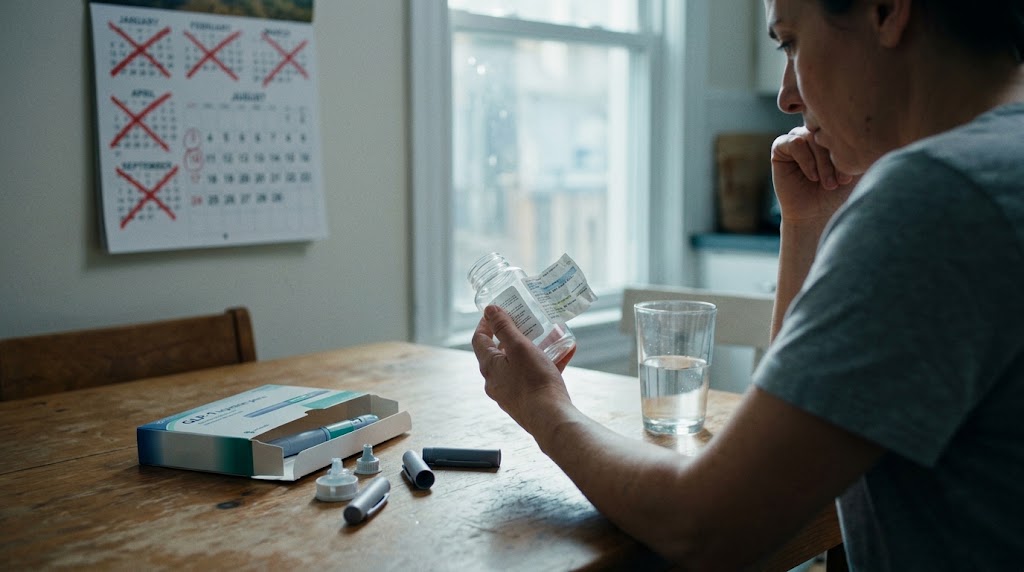
GLP-1 receptor agonist drugs have transformed treatment for type 2 diabetes and obesity over the past decade. Semaglutide, sold as Ozempic for diabetes and Wegovy for weight loss, and tirzepatide, sold as Mounjaro and Zepbound, are now among the most widely prescribed medications in the United States. Approximately one in eight American adults currently takes one of these drugs. Beyond their effects on weight and blood sugar, large clinical trials have established that GLP-1 drugs significantly reduce the risk of heart attack, stroke, and cardiovascular death in people with established cardiovascular disease.
The conversations around these drugs have focused almost entirely on what they do while people take them. Far less attention has been paid to what happens when people stop.
A study published in BMJ Medicine by researchers at Washington University School of Medicine in St. Louis has now produced the most comprehensive answer to that question yet. The finding changes how patients and clinicians should think about GLP-1 therapy as a long-term commitment rather than a course of treatment with a natural endpoint.
The study followed 333,687 US veterans with type 2 diabetes for up to three years. Of those, 132,551 had been prescribed GLP-1 drugs and 201,136 had been prescribed sulfonylureas, an older class of oral diabetes medications that are considered cardiovascular-neutral. Researchers assessed participants’ treatment status every six months and tracked major adverse cardiovascular events: heart attack, stroke, and death.
The primary finding confirmed what clinical trials had already shown: consistent use of GLP-1 medications was strongly protective. Three years of continuous use produced an 18% reduction in major adverse cardiovascular events compared to those taking sulfonylureas.
What happened when people stopped was not what most people expected.
How fast the protection disappears
During the three-year follow-up period, approximately 26% of GLP-1 users stopped taking the medication entirely. Another 23% paused treatment for at least six months before restarting. Together, these groups represented nearly half the GLP-1 users in the study, consistent with real-world data showing that many people discontinue these medications within the first year of starting.
The researchers evaluated cardiovascular outcomes based on how long participants had been off GLP-1 therapy. The pattern was dose-dependent and consistent: the longer the gap, the higher the risk.
Stopping for as little as six months was linked to a statistically significant increase in cardiovascular risk compared to continuous use. The benefit that had been building during months of therapy began to erode almost immediately after stopping.
After one year off the medication, participants had lost most of the cardiovascular protection they had accumulated during continuous treatment. The gradual reduction in heart attack, stroke, and death risk that took years of consistent drug use to establish had been largely reversed within twelve months of discontinuation.
After two years without GLP-1 therapy, the risk of major adverse cardiovascular events was up to 22% higher than among people who continued treatment, largely wiping out the cardiovascular protection that had been gained during active use.
“Three years of continuous GLP-1 use produced an 18% reduction in major adverse cardiovascular events,” said senior author Ziyad Al-Aly, a clinical epidemiologist at the VA Saint Louis Health Care System and Washington University. “But that protection erodes quickly. Protection that takes years to accumulate can vanish in a few months of stopping.”
The finding that surprised researchers most
The most unexpected result in the study concerned what happened when people who had stopped restarted their medication. The intuitive assumption would be that resuming GLP-1 therapy would restore the cardiovascular benefits that had been lost during the gap in treatment. The data did not support this assumption.
Once the cardiovascular protection was lost, restarting GLP-1 therapy did not fully restore it. Participants who had stopped and resumed treatment showed better outcomes than those who remained off the medication, suggesting some benefit from restarting. But they did not recover the full level of protection that continuous users had maintained throughout the study period.
This finding has significant implications for how patients and clinicians should approach gaps in GLP-1 treatment. The common pattern of stopping a medication during a period of cost difficulty or side effects and then restarting when circumstances change may carry a cardiovascular cost that is not fully recoverable.
“As little as one year off the drug was more than enough for study participants to lose benefits cultivated over years of continuous treatment,” the WashU Medicine summary noted. “Once lost, those gains were not fully restored by resuming treatment.”
Why stopping erases the protection
GLP-1 drugs protect the cardiovascular system through multiple mechanisms that operate simultaneously. The most visible is weight loss, which reduces the mechanical burden on the heart and improves metabolic risk factors. But weight-independent mechanisms are also at work.
GLP-1 receptors are present in the heart and blood vessels. Direct activation of these receptors produces anti-inflammatory effects, reduces blood pressure, lowers cholesterol, improves insulin sensitivity in cardiac tissue, and may directly stabilize atherosclerotic plaques. The SELECT trial, which followed 17,604 participants without diabetes, found that semaglutide reduced cardiovascular events by 20%, and that weight loss accounted for only about one third of this benefit. The other two thirds came from mechanisms independent of weight.
When GLP-1 therapy stops, all of these effects begin to reverse. Inflammation rises. Blood pressure increases. Cholesterol climbs. Insulin resistance returns. The drugs were suppressing these risk factors while people took them. Stopping removes the suppression.
“When people stop, these start going in the wrong direction,” Al-Aly said. “Cholesterol, blood pressure, inflammation and insulin resistance all worsen after discontinuation.”
The cardiovascular protection built during continuous use is therefore not a lasting structural change to the cardiovascular system. It is an ongoing pharmacological effect that requires ongoing drug exposure to maintain. When the drug stops, the protection gradually degrades as the underlying risk factors return to their pre-treatment levels.
What this means for the half of users who stop
The study’s most practically significant finding concerns the population it is describing: not a small group of outliers but a substantial proportion of everyone taking these medications.
Approximately half of all GLP-1 users stop within the first few months of treatment. The reasons are well documented. GLP-1 drugs are expensive. In the United States, monthly costs can exceed $1,000 without insurance coverage. Insurance authorization is often contingent on meeting specific criteria, and coverage can be lost if a patient’s circumstances change. Side effects, particularly nausea in the early weeks of treatment, lead some patients to stop before they reach therapeutic benefit. Supply shortages have forced some patients to pause treatment involuntarily. And many patients who began these medications for weight loss view them as a temporary intervention with an endpoint rather than a lifelong treatment.
The BMJ Medicine study reframes these individual decisions within a cardiovascular risk context that most patients and many clinicians have not been fully accounting for. Stopping Ozempic or Mounjaro is not simply returning to baseline. It is, on the basis of this data, potentially erasing years of accumulated cardiovascular protection at a rate faster than that protection was built.
“Clinicians should treat adherence to GLP-1 treatment as an important outcome in its own right, not an afterthought,” Al-Aly said. “Health systems need plans in place to help people continue their medication indefinitely, recognizing that GLP-1s treat chronic conditions.”
The population at greatest risk from stopping
The study population consisted of veterans with type 2 diabetes, a group with above-average cardiovascular risk. Many had existing risk factors including hypertension, high cholesterol, and prior cardiovascular events. The 22% increase in cardiovascular risk observed after two years off GLP-1 treatment reflects the reversal of drug effects in this elevated-risk population.
Whether the same magnitude of cardiovascular risk rebound occurs in lower-risk populations, such as people taking GLP-1 drugs primarily for weight loss without diabetes or established cardiovascular disease, cannot be directly established from this study. The mechanisms are the same but the baseline risk and therefore the absolute impact of restarting or stopping may differ.
The finding is likely most clinically relevant for the population with the most to lose from the cardiovascular benefits eroding: people with established cardiovascular disease, high baseline cardiovascular risk, or both. For these patients, the decision to stop GLP-1 therapy carries a risk that extends well beyond weight regain.
What the study does not establish
The study used a target trial emulation design, a robust observational methodology that mimics the structure of a randomized trial using existing data. This approach is stronger than naive observational comparison, but it cannot eliminate all confounding. People who stop GLP-1 drugs may differ from people who continue in ways that affect cardiovascular risk independently of the medication decision.
The sulfonylurea comparator group is also a limitation. Sulfonylureas are cardiovascular-neutral, meaning they neither protect nor harm cardiovascular health. Using them as the comparison group means the study is measuring the risk from stopping GLP-1 drugs relative to never having started, rather than relative to some alternative active treatment. This framing is appropriate for answering the study’s central question but limits comparison to what different approaches to ongoing diabetes management might produce.
The three-year follow-up period also means the study cannot characterize what happens to cardiovascular risk beyond two years of discontinuation, or whether longer-term gaps produce further risk escalation.
What the study establishes clearly, across 333,687 people followed for three years with treatment status assessed every six months, is the direction, magnitude, and speed of the cardiovascular risk rebound after stopping GLP-1 therapy. The protection erodes fast. Two years off the drug raises heart risk by 22% compared to those who kept taking it. And restarting does not fully restore what was lost.
The study, “Glucagon-like peptide 1 receptor agonist discontinuation and risks of major adverse cardiovascular events in adults with type 2 diabetes: a target trial emulation”, was authored by Yan Xie, Taeyoung Choi, and Ziyad Al-Aly at Washington University School of Medicine in St. Louis and the Veterans Affairs Saint Louis Health Care System, and published March 18, 2026 in BMJ Medicine.
Source: Washington University School of Medicine / Veterans Affairs Saint Louis Health Care System. DOI: 10.1136/bmjmed-2025-002150