Scientists found that a tiny jumping spider sleeps in two stages, and one of them looks a lot like the stage where humans dream

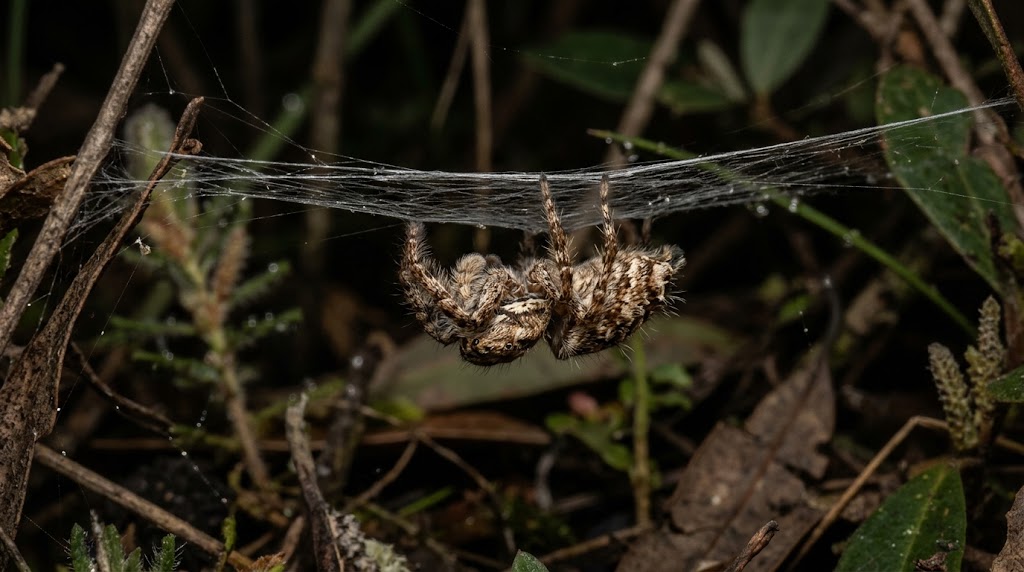
Portia fimbriata is an Australian jumping spider about the size of a coin, and an unusually clever hunter that lures other spiders by imitating struggling prey in their webs. Researchers at the University of Bonn wanted to know whether an animal like this truly sleeps, and if so, how. They placed the spiders in small dishes and filmed them with infrared cameras over several days and nights. They also tested how easily the spiders woke to sound and what happened when their rest was interrupted.
The spiders sleep, and in two distinct stages. During one of them, the spiders’ eyes moved and their muscles twitched, the same signs that mark REM sleep in humans, the stage most associated with vivid dreaming.
The researchers say this is the first comprehensive experimental confirmation that spiders have genuine, regulated sleep rather than just periods of stillness. Portia sleeps hanging upside down beneath a strand of its own silk.
Whether spiders dream is a different question, and the team is careful about it. Eye movements and twitches during sleep do not prove that anything like a dream is happening, and the researchers could not measure the spiders’ brain activity directly.
The finding builds on earlier work by the same group. In 2022, a study in PNAS filmed baby jumping spiders at night and found regular bouts of movement in their retinas, which jumping spiders can shift inside their eyes, along with leg twitches, and suggested a REM-like state. That study was based on observation alone. The new one adds the tests scientists use to define sleep in any animal.
Those tests matter. To call stillness sleep, researchers look for a reduced response to the outside world and for sleep rebound, meaning the animal sleeps more after being kept awake. The team first had to find a sound stimulus the spiders reliably respond to, then measured how quickly they reacted at different times. They also interrupted the spiders’ rest and checked whether they made up for it afterward, and the results pointed to genuinely regulated sleep.
The second finding is what this suggests about evolution. Most of what we know about sleep comes from mammals and birds, whose nervous systems are organized very differently from a spider’s. Finding two-stage sleep in a spider raises the question of whether sleep stages are far older and more widespread in the animal kingdom than thought, or whether they evolved more than once.
The team is now comparing sleep across spider species, studying spiders in the wild as well as the lab, and looking at whether REM-like sleep helps with learning in these unusually smart hunters. They also plan to study how artificial light at night affects spider and insect sleep. For humans, too, the timing and quality of sleep keep turning up in surprising research, from night owls and early retirement to cannabis and broken sleep.
There are limits to what this shows. The study relied entirely on behavior, not brain recordings, and focused on a single species in laboratory dishes. The REM-like movements resemble human REM sleep, but similar-looking behavior in such different animals may not involve the same underlying processes.
Source
Geiger N, Capelle MQ, Rosentreter P, Herberstein ME, Bahl A, De Agrò M, Klein BA, Rößler DC. “Behavioral evidence for two-stage sleep in spiders.” Proceedings of the National Academy of Sciences, 2026.
DOI: 10.1073/pnas.2618030123
Also cited
Rößler DC, Kim K, De Agrò M, et al. “Regularly occurring bouts of retinal movements suggest an REM sleep-like state in jumping spiders.” Proceedings of the National Academy of Sciences, 2022.
DOI: 10.1073/pnas.2204754119