Scientists compared 83,000 Danish twins and their spouses to see who shared the risk of severe COVID, and it was not the twin

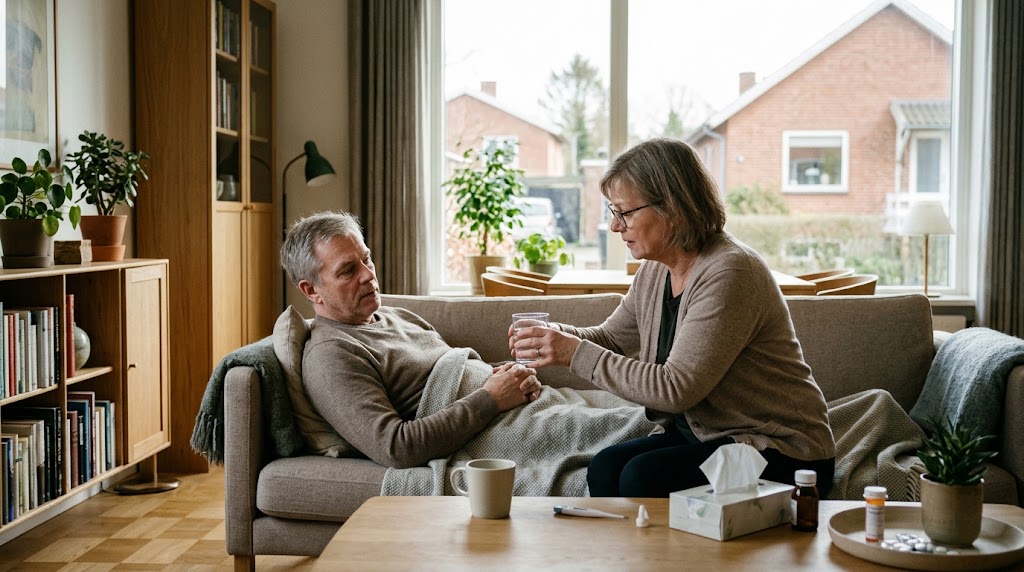
Some people barely noticed COVID-19 while others ended up in hospital, and scientists have long asked how much of that comes down to genes. Researchers at the University of Southern Denmark used one of the world’s largest twin registries to test it, following more than 83,000 Danish adult twins and over 32,000 of their spouses. Twins share genes but often live apart as adults; spouses share a home but not their DNA. The team compared how often each group ended up in hospital with COVID-19.
When one twin was hospitalized with COVID-19, their co-twin showed no detectable increase in risk of being hospitalized too. But when someone’s husband or wife was hospitalized, the spouse had more than three times the risk of being hospitalized themselves, compared with matched controls.
“Who you live with may matter more for severe COVID-19 than who you are genetically related to,” said associate professor Maria Timofeeva of the University of Southern Denmark’s Department of Public Health.
That does not mean genes play no part. A large international genetics study in Nature in 2021 identified several regions of the genome linked to severe COVID-19, and the Danish researchers stress that their results do not rule out genetic effects. What the twin and spouse comparison suggests is that, at the level of a whole population, those effects were small next to the influence of shared surroundings and close contact.
The design is a classic one. If genes drove severe disease, identical twins, who share all their genes, should tend to get severely ill together more often than fraternal twins, who share about half. Spouses offer the opposite test: no shared genes, but a shared home, shared habits and often shared exposure to the virus at the same time.
For severe COVID-19, the pattern pointed clearly toward the spouses. Twin studies have also untangled family influences in other areas, such as the link between screen time and depression in teenagers.
Genes were not irrelevant for catching the virus in the first place. The researchers found no sign of a genetic influence on infection in the first two waves of the pandemic, and a modest one later, with heritability estimated at about 19%. Social closeness, though, was a key factor for who got infected.
The second finding is what the study could not explain. Spouses may catch the virus from each other at the same moment, which can mean a heavier dose. They may also share diet, weight, smoking, age and access to health care, all of which affect how sick someone gets. The study cannot say which of these matters most.
For couples, the practical point is about protecting each other. When one partner is seriously ill with an infection, the other is at higher risk too, and steps like vaccination, early testing and getting treatment quickly apply to both. Partners shape each other’s health in other ways as well, as research on marriage and biological aging suggests.
There are limits to what this shows. The study covers Denmark during the pandemic, with its own testing, vaccination and hospital practices. Hospitalization was the measure of severe disease, and spouses of hospitalized patients may also have been more likely to be tested and admitted. The researchers say the study shows a pattern, not the specific reasons behind it.
Source
Timofeeva MN, Pedersen JK, et al. “Familial factors in SARS-CoV-2 susceptibility and COVID-19 severity: a nationwide Danish study of adult twins and their spouses.” International Journal of Epidemiology, 2026.
DOI: ADD-DOI-HERE
Also cited
COVID-19 Host Genetics Initiative. “Mapping the human genetic architecture of COVID-19.” Nature, 2021.
DOI: 10.1038/s41586-021-03767-x