New research found that brain immune cells in Alzheimer’s patients can carry cancer-driving mutations detectable in a routine blood test, and drugs that target those mutations already exist

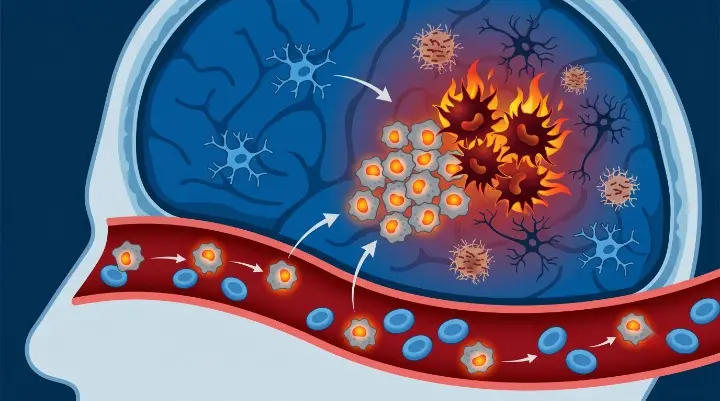
Most people think of cancer mutations and Alzheimer’s as belonging to entirely separate categories of disease, one involving cells that grow too much, the other involving cells that die too much. A study published in Cell on June 11 by researchers at Mount Sinai and Boston Children’s Hospital found a population of brain immune cells in Alzheimer’s patients carrying the same mutations that drive blood cancers, and these mutant cells appear to have been actively favored inside the diseased brain.
The team, including co-corresponding author Eirini Papapetrou at Mount Sinai and Christopher Walsh at Boston Children’s, sequenced 149 cancer-driving genes in microglia, the brain’s resident immune cells, from 190 Alzheimer’s patients and 121 aged controls without the disease. Three genes stood out: DNMT3A, ASXL1, and TET2. Mutations in these genes showed clear signs of positive selection specifically in Alzheimer’s brains, meaning cells carrying these mutations had expanded and outcompeted their neighbors to a degree not seen in the brains of people without the disease.
What positive selection actually means here
Positive selection is a concept usually discussed in evolutionary biology or cancer genetics. A cell acquires a mutation that gives it some advantage, divides faster or survives longer than its neighbors, and over time its descendants make up a larger share of the tissue. The researchers found statistical signatures of exactly this process in microglia from Alzheimer’s brains, concentrated in the same three genes that are also common drivers of clonal hematopoiesis, a well-documented phenomenon where blood stem cells acquire mutations and their mutant descendants gradually take over a larger fraction of the blood system with age.
The mutational patterns matched what’s typically seen in blood. Most of the ASXL1 mutations found in Alzheimer’s brains were nonsense mutations, the same type and even some of the same specific recurrent variants seen in clonal hematopoiesis. The TET2 mutations clustered in the gene’s oxygenase domain, again mirroring the pattern seen in blood-based clonal hematopoiesis and notably absent in the aged control brains.
Where these cells came from
The same mutations turned up in blood samples from the same patients. Microglia are generally thought to be long-term residents of the brain, seeded during early development and largely self-renewing afterward without much new input from circulating blood cells. Finding identical rare mutations in both brain-resident immune cells and blood pointed the researchers toward a different origin story: blood-forming stem cells acquire these mutations as part of ordinary age-related clonal hematopoiesis, some of their mutant progeny cross into the brain, and once there, those cells are selected for again, expanding further within the brain itself.
To test whether the mutations themselves were doing something functional, rather than just being a marker that happened to come along for the ride, the team used CRISPR to engineer human stem cells with the same DNMT3A, ASXL1, and TET2 mutations found in patients, then differentiated those stem cells into microglia-like cells in the lab. The engineered cells adopted inflammatory gene expression programs and disease-associated microglial states that have separately been linked to neurodegeneration in other research. The mutations were not passive passengers. They changed what the cells became.
A field with a complicated history
It’s worth being direct about something here: this is not the first time these three genes have shown up in Alzheimer’s research, and earlier work has sometimes pointed in the opposite direction. A 2024 study in Nature Medicine reported that overall clonal hematopoiesis was associated with lower Alzheimer’s risk, and a more recent Cell Stem Cell paper found that TET2-mutant clonal hematopoiesis specifically was linked to a 47 percent reduced risk of late-onset Alzheimer’s in a large biobank, with mouse experiments showing TET2-mutant immune cells infiltrating the brain and improving amyloid plaque clearance. DNMT3A-mutant cells did not show the same protective pattern in those experiments.
The new Cell paper isn’t measuring the same thing as those studies. It isn’t asking whether having these mutations in your blood predicts your overall risk of developing Alzheimer’s. It’s asking, among people who already have Alzheimer’s, which mutated cells got selected for inside the diseased brain tissue itself, and finding that cells with this specific signature were inflammatory and proliferative once there. Both things could be true: a given mutation type might be associated with lower population-level risk on average, while a different mutational pattern, once present inside an already-diseased brain, gets selected for and contributes to local inflammation. Untangling exactly how these findings fit together is an open question the field is still working through.
Why this still matters clinically
Despite that complexity, the practical implications the researchers point to are fairly concrete. Because these mutations are detectable in blood, not just brain tissue that’s nearly impossible to sample in a living patient, a blood test could in principle screen for the presence of these specific mutational signatures as part of an Alzheimer’s risk or progression profile. Papapetrou described the findings as functional evidence that mutations commonly associated with aging blood cells and cancer biology can directly alter how brain immune cells behave, with the engineered cells showing inflammatory signatures strongly associated with neurodegeneration.
The cancer connection also opens a specific therapeutic avenue. Drugs that target cells carrying DNMT3A, ASXL1, or TET2 mutations already exist because these are the same mutations that drive certain blood cancers and have been targeted in oncology for years. Whether those drugs could be repurposed to selectively reduce the population of inflammatory, mutation-carrying microglia in an Alzheimer’s brain, without disrupting the broader immune system, is now a question with an actual starting point rather than a hypothetical one.
Sources:
Walsh, C.A., Papapetrou, E.P., et al.
Somatic cancer variants enriched in Alzheimer’s disease microglia-like cells drive inflammatory and proliferative states.
Cell, June 11, 2026.
cell.com/cell/fulltext/S0092-8674(26)00341-7
mountsinai.org/about/newsroom/2026/cancer-associated-mutations-in-brain-immune-cells-may-contribute-to-alzheimers-disease
beingpatient.com/cancer-linked-mutations-alzheimers-brain-cells