New research found that silently converting stress into hopelessness accelerates memory loss faster than almost any external risk factor


You probably know someone who never complains. Someone who carries everything quietly, absorbs every difficulty without showing it, and responds to genuine hardship with a composed silence that looks, from the outside, like strength. New research from Rutgers Health suggests that what looks like resilience may be doing something specific and measurable to the brain. And it is not protective.
A study published in The Journal of Prevention of Alzheimer’s Disease tracked over 1,500 older adults across six years and found that internalizing stress, particularly the tendency to swallow difficult emotions and convert them into a persistent state of hopelessness, was the single strongest predictor of accelerating memory decline in the group. Not age. Not physical health markers. Not neighborhood conditions or social isolation in the conventional sense. The act of turning stress inward and holding it there was doing more damage to cognitive function over time than any of the external factors the researchers measured alongside it.
What Internalized Stress Actually Means
The study draws a careful distinction between stress as an external condition and stress as an internal orientation. Everyone faces external pressure. The question the Rutgers team was asking was what happens when a person consistently chooses, or feels compelled, to absorb that pressure privately rather than voice it, process it, or seek relief from it.
Internalized stress in this research was defined by two overlapping components. The first was hopelessness, a persistent low-level sense that circumstances cannot improve and that effort is unlikely to change outcomes. The second was a behavioral tendency to absorb and contain stressful experiences rather than expressing or resolving them. Together these create a state where the emotional system is chronically activated but never discharged, a pressure that never finds a release valve.
The researchers analyzed data from the Population Study of ChINese Elderly, the largest community-based cohort study of older Chinese Americans, drawn from over 1,500 participants in the Chicago metropolitan area interviewed across multiple waves between 2011 and 2017. They examined three distinct sociobehavioral factors: stress internalization, neighborhood and community cohesion, and external stress alleviation through social support and activity. Only one of these three showed a consistent and significant link to memory decline over time. The other two did not.
The Number That Reframes Everything
The magnitude of the effect is what makes this finding worth sitting with. Participants with higher hopelessness scores showed word-recall drops equivalent to four extra years of biological aging, a 0.043 standard deviation decline annually above what normal aging would predict. This is not a marginal statistical association. It is a cognitive cost large enough to be clinically meaningful, accumulating year after year in people who show no outward signs of struggle precisely because they have become skilled at concealing it.
What makes the finding particularly striking is what did not predict memory decline. Community cohesion, the sense of belonging to a supportive neighborhood, showed no significant protective effect on cognitive trajectory. External stress alleviation, the kind of social support typically emphasized in public health interventions, also failed to register as a meaningful protective factor. The researchers found that the internal emotional orientation of the individual, specifically whether they converted their stress into hopelessness and held it inside, mattered far more than the external social resources available to them.
Why the Brain Cannot Ignore What You Are Hiding
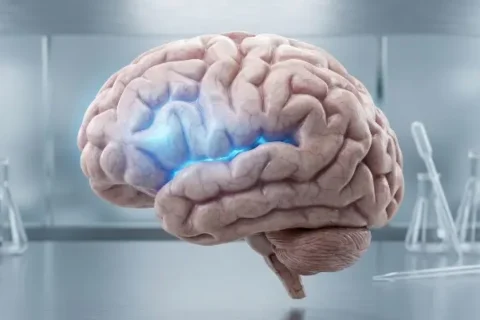
The mechanism connecting internalized stress to memory deterioration runs through the hippocampus, the brain structure most directly responsible for encoding new memories and consolidating them over time. The hippocampus is also one of the most cortisol-sensitive regions in the entire brain, densely packed with glucocorticoid receptors that respond to the stress hormone in ways no other brain area does quite so dramatically.
When stress is externalized, expressed, shared, or resolved, the cortisol response follows the pattern it was designed for: activation followed by recovery. The system spikes and returns to baseline. When stress is internalized and converted into chronic hopelessness, the HPA axis, the hypothalamic-pituitary-adrenal system that regulates cortisol production, stays persistently activated. Cortisol levels remain elevated not in dramatic spikes but in a continuous low-grade flood that the hippocampus absorbs over months and years.
Prolonged cortisol exposure impairs hippocampal neurogenesis, the production of new neurons. It induces dendritic atrophy, shrinking the branching structures through which neurons communicate. It reduces synaptic density, thinning the connections that memory encoding depends on. The brain that is silently carrying hopelessness is not resting. It is being slowly eroded by its own stress chemistry, in a process that leaves no visible symptoms until the erosion has already been underway for years.
Neuroinflammation compounds this process. Chronic psychological stress activates inflammatory pathways in the brain that generate oxidative damage to neurons. Unlike the acute inflammation that accompanies injury or infection and resolves once the threat is gone, the inflammation driven by chronic internalized stress is low-grade and persistent, a background process that accumulates tissue damage without ever triggering the obvious alarm signals that would prompt someone to seek help.
The Silence That Looks Like Strength
The cultural dimension of this research adds a layer that makes it relevant far beyond the specific population studied. The researchers chose to study older Chinese Americans in part because this group is historically underrepresented in cognitive aging research, but also because cultural pressures in many Asian communities create specific conditions for stress internalization. The model minority stereotype, the expectation of self-sufficiency, the social norm against expressing emotional vulnerability, all of these create an environment where internalizing stress is not just a personal tendency but a culturally reinforced response.
The result, as the data shows, is that emotional struggles go unnoticed and untreated not because they are absent but because they have been effectively hidden, sometimes from others, sometimes even from the person carrying them. The researchers note that older immigrants in particular face compounding stressors including language barriers, cultural adjustment, and the accumulated losses of displacement, all of which tend to be absorbed quietly by people who have spent a lifetime learning that voicing distress is not an option.
But the brain does not share that cultural understanding. It responds to the emotional load the person is carrying, not the composure they are displaying. The hippocampus does not grant exceptions for stoicism.
Why Community Support Alone Is Not Enough
The finding that external social support failed to show a significant protective effect on memory is worth examining carefully because it challenges one of the most widely promoted assumptions in preventive health messaging. The advice to stay socially connected, join community groups, and maintain strong relationships is well-intentioned and supported by other research. But this study suggests that when the underlying problem is internalized stress, the presence of community around a person does not automatically address what is happening inside them.
A person can be surrounded by neighbors, family members, and social programs and still be converting every difficulty into private hopelessness. External support cannot reach internalized stress unless the person has access to ways of processing and releasing what they have been carrying. The implication for clinical practice is that interventions need to go beyond social connectedness and address the internal emotional orientation directly, specifically the tendency toward hopelessness and the habit of absorption rather than expression.
Dr. Michelle Chen, lead author of the study and assistant professor of neurology at Rutgers Robert Wood Johnson Medical School, framed it directly: stress and hopelessness may go unnoticed in aging populations, yet they play a critical role in how the brain ages. Because these feelings are modifiable, unlike age or genetics, there is a genuine clinical opportunity here if the right interventions can be developed and delivered in ways that account for cultural context.
What This Means for Everyone Who Stays Quiet
The Rutgers study focused on a specific population, but the neurobiological mechanism it is pointing to is not culturally specific. The hippocampus does not distinguish between a Chinese American elder absorbing family stress in Chicago and a middle-aged professional in any other city who has been quietly converting workplace pressure, financial anxiety, or relationship difficulty into a private, persistent sense of futility.
Internalized stress and its conversion into hopelessness is not a cultural phenomenon. It is a human one, shaped by personality, upbringing, circumstance, and the social contexts that teach people what kinds of feelings are acceptable to show. The data from this six-year longitudinal study is saying that whatever the source of the pattern, the brain pays the same price.
Staying quiet about what is breaking you is not a neutral act. It is a biological event, playing out in slow motion in the most memory-sensitive structure of the brain, producing damage that will eventually show up as something that looks like normal aging, decades after the silence began.