New research shows happiness isn’t just a mood but a physical surge in your calcium channels

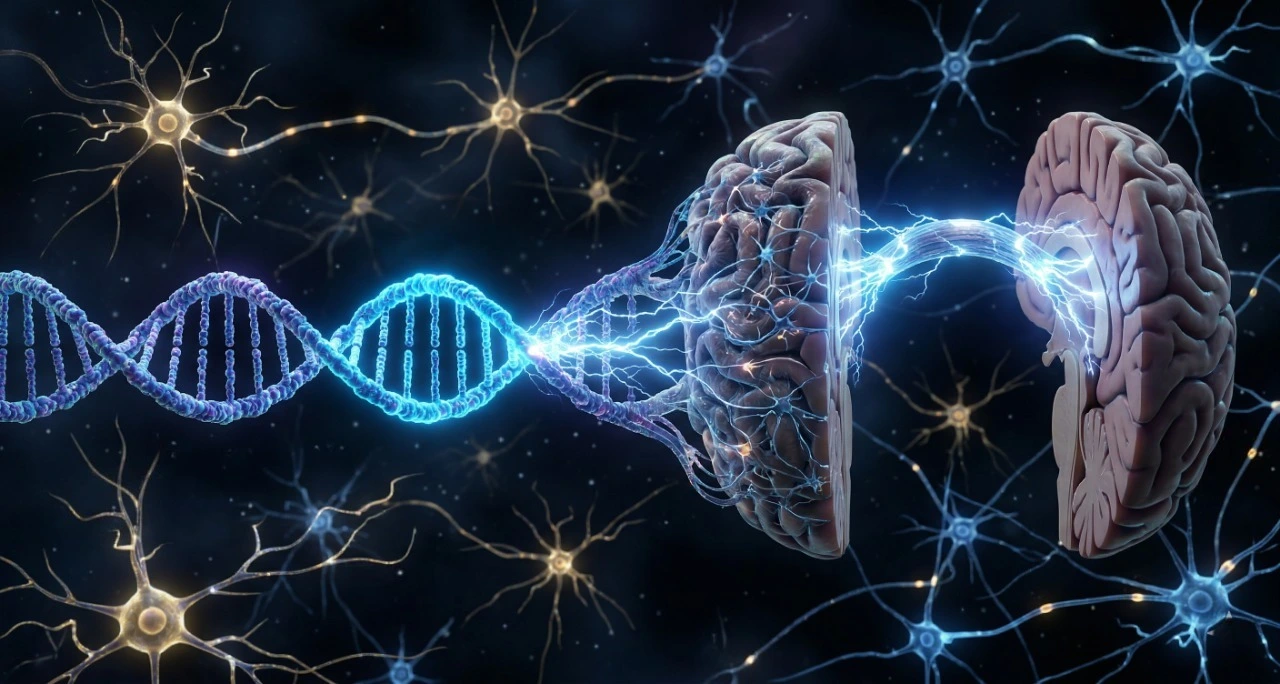
Your brain is a series of leaky faucets. Most of the time, the microscopic drips of chemicals crossing the gap between neurons are too weak to trigger a meaningful thought or a lasting memory. They are whispers in a crowded room. But new research has revealed that serotonin—the molecule we usually associate with a “good mood”—is actually a high-tech biological hacker. It doesn’t just make you feel better; it physically overrides the gatekeepers of your brain’s communication lines.
A team led by Rinako Miyano and Takeshi Sakaba at Doshisha University recently achieved a feat that most neuroscientists consider a technical nightmare. They performed direct “patch-clamp” recordings on the hippocampal mossy fiber terminals—tiny, bulbous structures in the brain’s memory hub. Because these terminals are so small, getting a direct electrical read is nearly impossible. Their findings, published in PNAS, show that serotonin hijacks the very machinery of the synapse to turn a “conditional” signal into a full-blown explosion of data.
The Microscopic Heist
Communication in your brain relies on calcium. When an electrical pulse hits a nerve terminal, “valves” known as P/Q-type calcium channels snap open. Calcium floods in, acting as the trigger for the cell to vomit out neurotransmitters into the next neuron. In many parts of the hippocampus, this process is surprisingly inefficient. The valves don’t open wide enough, or the “release machinery” is too sluggish to react.
Miyano’s team found that when serotonin hits these terminals, it doesn’t just hang around. It activates a specific messenger called Protein Kinase A (PKA). This protein acts like a specialized wrench, tightening the coupling between the calcium valves and the vesicles waiting to be released. The result isn’t a subtle change. The researchers observed that serotonin significantly potentiates these calcium currents, effectively forcing the faucet open.
The PKA Overdrive
The “wow-effect” here is that serotonin is doing two things at once. It isn’t just letting more calcium in; it is also recalibrating the “release machinery” itself. Even when the researchers artificially lowered the calcium levels back to normal, the synapses treated with serotonin continued to fire at an elevated rate.
This is a physical reconfiguration of how you process information. By using PKA-dependent mechanisms, serotonin ensures that the vesicles—the tiny envelopes containing your brain’s “mail”—are primed and ready to go. It increases what scientists call “fusion competence”. In simpler terms, it makes the brain’s data-transfer system much more sensitive and much faster. The time constant of the release process was cut by more than half, dropping from 80 milliseconds to just 26.
The Memory Detonator
Why does this matter for you? The hippocampus is the brain’s primary engine for memory and learning. Normally, mossy fiber synapses operate in a “conditional” mode—they only fire when they are absolutely certain the information is important. But serotonin shifts them into what the researchers call a “fully detonating” mode.
This shift is likely the biological foundation for how we form memories under emotional stress or during periods of high focus. It also provides a startlingly clear look at why SSRIs—selective serotonin reuptake inhibitors—are so effective and yet so complex. By keeping serotonin levels high, these drugs may be constantly forcing your memory circuits into an “overdrive” state, which has massive implications for treating anxiety and psychiatric disorders.
The End of the “Chemical Imbalance” Myth
For decades, the public has been told that depression and anxiety are just “chemical imbalances,” as if the brain were a soup that needed more salt. This study proves that the reality is far more mechanical. It is about “synaptic strength” and the physics of calcium flow. Serotonin is a tool used by the brain to dynamically regulate its own circuit function.
If your brain is a computer, serotonin isn’t the software; it’s the guy overclocking the processor so it can handle a heavier workload. The Miyano study shows us the exact gears being turned. By targeting P/Q-type channels—which were previously thought to be mostly immune to this kind of modulation—serotonin proves it is the ultimate master of the brain’s hardware. We are no longer just guessing why certain molecules change our minds. We are finally watching them pull the levers in real-time.