Scientists found that the antidepressant millions take for depression is worsening tinnitus through the same brain chemical it uses to treat anxiety


Roughly 750 million people worldwide live with tinnitus. The persistent ringing, buzzing, or hissing that never stops, that follows them into quiet rooms and keeps them awake at night, that compounds the anxiety or depression many of them were already managing before the sound began. A significant number of those people are also taking antidepressants, specifically SSRIs, the serotonin-boosting drugs prescribed to treat the exact conditions that tinnitus is so effective at causing or worsening.
Researchers at Oregon Health and Science University, working with colleagues at Anhui University in China, have now mapped a specific brain circuit that explains what many of those patients have been quietly reporting for years: since starting their antidepressant, the ringing got worse. Their doctors often dismissed this. The new research, published in the Proceedings of the National Academy of Sciences in April 2026, says those patients were right.
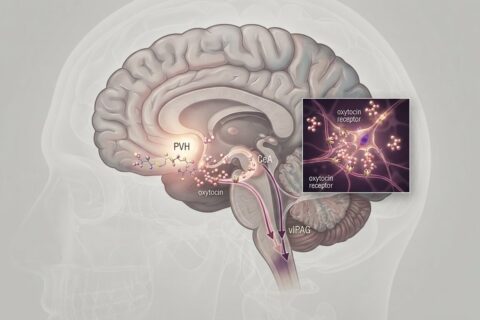
For millions of people, SSRIs are a lifeline for managing depression and anxiety. However, a new study reveals a hidden cost: elevated serotonin can directly exacerbate or even induce tinnitus by mapping a specific straight-line neural circuit from serotonin-producing neurons to the auditory system.
The Circuit Nobody Had Mapped
The connection between serotonin and tinnitus had been suspected for years based on patient reports, but the underlying mechanism was unknown. Without a mechanism, the clinical response to patients reporting worsening tinnitus on SSRIs was largely to attribute it to increased anxiety about symptoms, nocebo effects, or coincidental timing. The OHSU team set out to find whether the connection was real at the neural circuit level.
Using optogenetics, a technology that allows researchers to activate or silence specific groups of neurons using light with millisecond precision, the team mapped the serotonergic projections running from the raphe nuclei, the brain’s primary serotonin-producing centers, down into the auditory brainstem. What they found was a direct, discrete circuit connecting the serotonin system to the dorsal cochlear nucleus, the brainstem region where sensory integration from the ear occurs and where tinnitus is believed to originate.
“We’ve suspected that serotonin was involved in tinnitus, but we didn’t really understand how,” said co-senior author Zheng-Quan Tang, Ph.D., of Anhui University. “Now, using mice, we’ve found a specific brain circuit involving serotonin that goes straight to the auditory system, and found that it can induce tinnitus-like effects.”
When the researchers activated serotonergic neurons optogenetically, producing elevated serotonin specifically in the auditory brainstem, mice developed behavioral signs of tinnitus. They showed the head-shaking and startle suppression responses that are used in animal research as validated indicators of tinnitus-like experience. The elevated serotonin did not have to come from a drug. The circuit was functional with the brain’s own serotonin. The drug simply floods it more consistently and at higher levels than the brain would produce naturally.
What Is Happening Inside the Auditory Brainstem
The mechanism runs through a specific cell type called fusiform cells in the dorsal cochlear nucleus. These neurons sit at the first major processing stage in the auditory pathway inside the brain, receiving input from the cochlea and integrating it with signals from other brain regions before passing it up toward the auditory cortex where sound perception happens consciously.
Previous OHSU research published in Cell Reports had already shown that fusiform cells become hyperactive and hypersensitive to stimulation when exposed to serotonin. “We saw that the activity of those neurons went through the roof,” Trussell said. The 2026 PNAS study extended this finding by demonstrating the complete circuit: serotonin neurons project directly to the dorsal cochlear nucleus, activate fusiform cells, and drive the kind of sustained hyperactivity that produces tinnitus-like behavior.
The circuit the researchers mapped is essentially a straight line. Serotonin-producing neurons in the raphe nuclei connect directly to the auditory brainstem without passing through the complex associative networks that mediate most of serotonin’s effects on mood, motivation, and cognition. This anatomical directness is part of why the auditory system is vulnerable to serotonin elevation in ways that the clinical prescribing framework never anticipated. The brain region responsible for tinnitus is not protected by the layers of modulatory processing that buffer other serotonin-sensitive systems.
The Patients Who Were Told It Was In Their Head
Lead author Zheng-Quan Tang noted that a review of existing scientific literature indicated that many patients reported an increase in tinnitus soon after they began taking SSRIs. These reports have existed in the clinical literature for years. Patients consistently describe the onset or worsening of tinnitus within days to weeks of starting SSRI treatment. The standard clinical response has been to attribute this to the anxiety-amplifying effects of early SSRI treatment, a well-documented phase during the first few weeks of antidepressant therapy when anxiety often temporarily worsens before the therapeutic effect establishes itself.
The OHSU circuit mapping suggests something biologically simpler is happening alongside whatever psychological factors may also be contributing. The drug is raising serotonin in a circuit that projects directly to the auditory brainstem. The auditory brainstem responds by becoming hyperactive. The person hears more ringing.
This is a validation that practicing clinicians have been slow to offer. Trussell said “this study highlights the importance of clinicians recognizing and validating patient reports of medication-associated increases in tinnitus.” The patients who reported their tinnitus worsened on antidepressants were observing a real pharmacological effect with a now-identified neural mechanism. They were not catastrophizing. They were not imagining the increase. A specific brain circuit was responding to their medication in exactly the way they described.
The Impossible Position This Creates
The clinical problem the OHSU findings expose is genuinely difficult to resolve. Tinnitus causes anxiety and depression at high rates. Anxiety and depression are treated with serotonin-raising medications. Those medications appear to worsen tinnitus through a direct neural circuit. Worse tinnitus intensifies anxiety and depression. The cycle is pharmacologically assisted.
For patients caught in this loop, the current situation offers little clarity. SSRIs are among the most widely prescribed drugs in the world, taken by an estimated 13% of Americans and comparable proportions in other high-income countries. Tinnitus affects 15% of the global population and is significantly more prevalent among people with depression and anxiety, the same population most likely to be prescribed SSRIs. The overlap between these two groups is enormous and largely unaddressed.
Trussell said “people with tinnitus should work with their prescribing physician to find a drug regimen that gives them a balance between relief of psychiatric symptoms like depression and anxiety, while minimizing the experience of tinnitus.” This is sensible clinical advice. But it requires physicians to first acknowledge that the medication may be worsening the tinnitus, which many have historically been reluctant to do without mechanistic evidence. That evidence now exists.
Where the Research Points Next
“Our study suggests a delicate balance,” Trussell said. “It may be possible to develop cell or brain region-specific drugs that steer the elevation of serotonin in some brain regions but not others. In that way, it may be possible to separate the beneficial and important effects of the antidepressant from the potentially harmful effects on hearing.”
The identification of the specific serotonin receptor subtypes active in the dorsal cochlear nucleus circuit is the next research priority. Different serotonin receptor subtypes respond to different compounds and can in principle be targeted independently. A next-generation antidepressant designed to raise serotonin in limbic and prefrontal regions while avoiding activation of the auditory brainstem circuit would address the mechanism directly rather than asking patients to tolerate a known side effect.
That drug does not exist yet. In the meantime, the circuit has been found, the mechanism has been identified, and the patients who noticed their tinnitus got worse when they started their antidepressant were describing a real neurological event that medicine is only now equipped to confirm.
Source:
Yu, M., Dai, Z., Wang, S., et al. A discrete serotonergic circuit involved in the generation of tinnitus behavior. Proceedings of the National Academy of Sciences, 2026; 123(17): e2509692123. DOI: 10.1073/pnas.2509692123 https://www.pnas.org/doi/10.1073/pnas.2509692123
https://news.ohsu.edu/2026/04/20/research-links-tinnitus-with-serotonin