A popular 10-minute memory test said many veterans were normal. When a VA clinic gave them a one-hour exam, 40% had a problem the short test missed

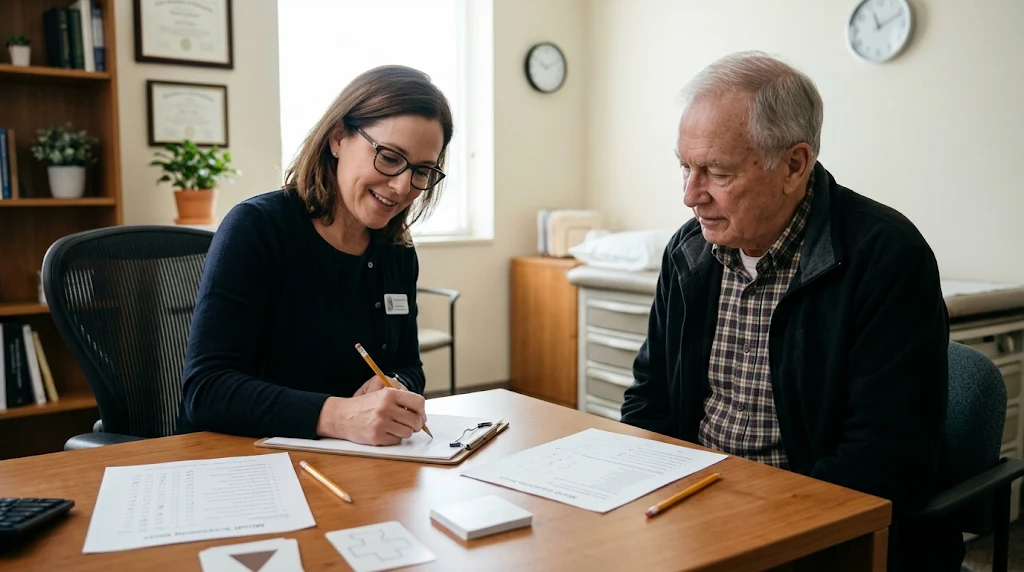
When someone notices their memory slipping, the first stop is usually a short paper test in the doctor’s office. The most popular one, the Montreal Cognitive Assessment, takes about 10 minutes. Researchers at Boston University and VA Boston looked at 1,858 veterans tested at a VA memory clinic between 2017 and 2025, and compared what that short screen found with the results of a one-hour exam given to the same patients.
The short test missed a lot. Among veterans whose score on the Montreal Cognitive Assessment, or MoCA, fell in the normal range, about 40% turned out to have mild cognitive impairment on the longer exam. Nearly 9% of that same group were found to have dementia.
The hour-long exam also picked up something nobody was looking for. Its mood screening found new symptoms of depression and anxiety in roughly 30% of patients, symptoms that had not been recorded before.
The longer test is called a neurobehavioral status exam. It includes memory testing along with mood screening, and worked whether it was given in person, over video or by phone.
“When someone notices changes in memory or daily life abilities, a longer, more comprehensive one‑hour test can provide a clearer picture and help guide next steps,” said corresponding author Brandon Frank, a neuropsychologist at VA Boston Healthcare System and assistant professor of neurology at Boston University.
The MoCA asks people to do things like draw a clock, copy a cube, remember five words and name animals. It is quick and widely used, which is exactly why it became the default. But a 10-minute snapshot has little room to catch subtle problems.
Full neuropsychological testing can take several hours, there are not enough trained specialists to go around, and written reports can take weeks. A one-hour exam sits between the two, and the authors argue it can help doctors decide who needs specialized brain scans or a full evaluation.
Those decisions matter more than they used to. Newer Alzheimer’s drugs are meant for people in the early stages of the disease, so catching mild cognitive impairment sooner can change which treatment options are open.
Frank said shorter screeners are still useful, but can miss important problems. Worldwide, the number of people living with dementia is expected to reach about 152.8 million by 2050.
Research keeps adding to what we know about the aging brain. Recent studies have looked at how loneliness shows up in brain waves during sleep and at napping and dementia risk in older adults. Sleep also matters for brain health, diabetes, heart disease and stroke.
For anyone worried about their own memory or a parent’s, the practical point is that a normal score on a short screen is not the final word. If the problems you notice in daily life persist, it is reasonable to ask whether a more detailed evaluation makes sense.
There are limits. Everyone in the study was a veteran seen at a VA memory clinic, meaning they or their doctors were already concerned about memory, so the numbers do not apply to the general population. The press release does not report ages or how the exam’s findings were confirmed over time, and the results come from one health system.
The work was funded by the Veterans Health Administration, the National Institutes of Health and the National Institute on Aging.
Source
Frank B, et al. “One-Hour Cognitive Battery Supports Disease Staging in Memory Clinic Practice.” Neurology Open Access, 2026.
DOI: 10.1212/WN9.0000000000000195