A study of 5,053 Americans found that making a drug legal instantly makes people think it is safer, even when told its properties are identical to an illegal drug. The opposite is also true.

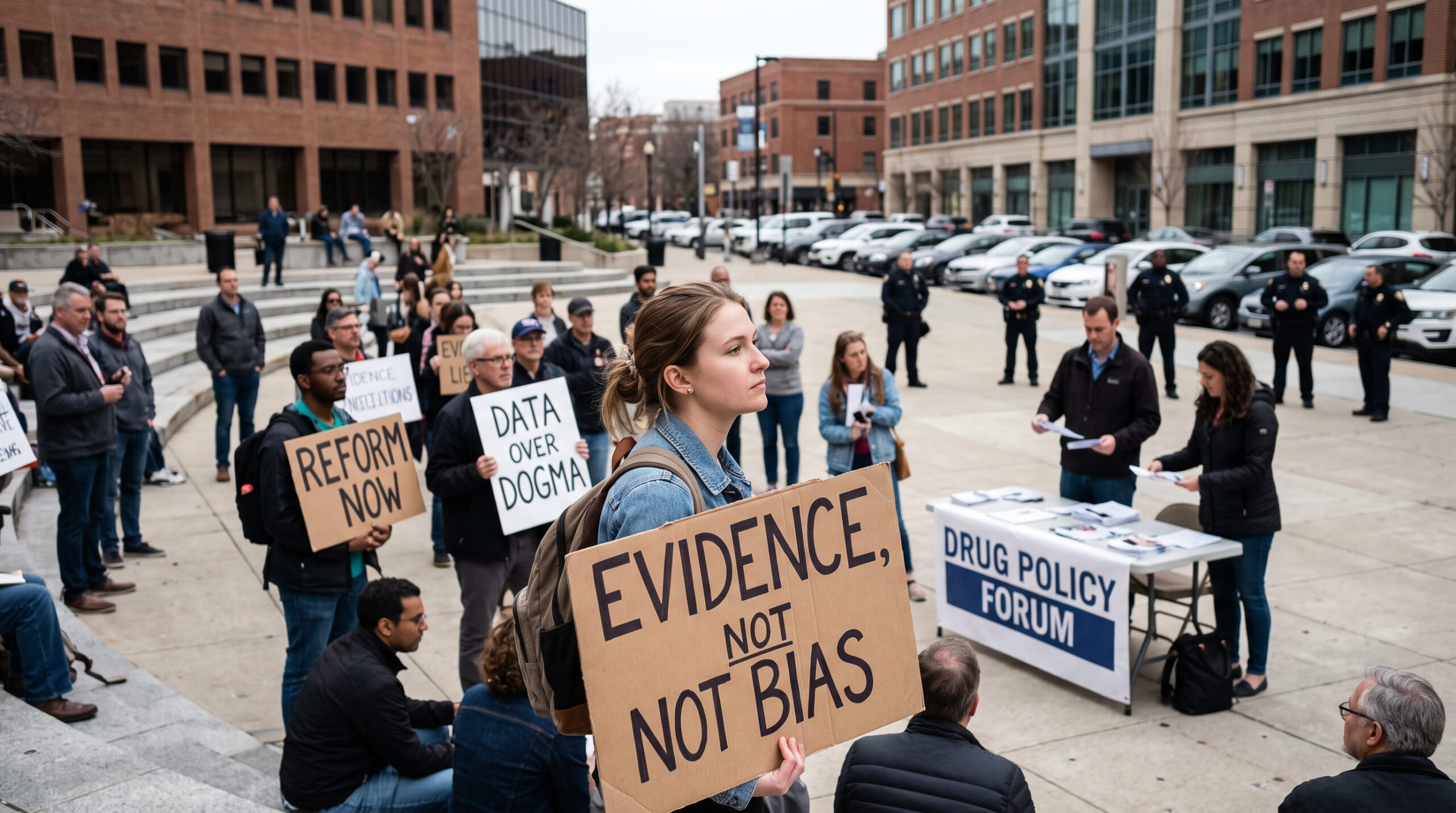
Drug policy debates in the United States tend to be conducted in the language of evidence. Advocates for stricter regulation argue that certain substances are more dangerous, more addictive, or more harmful to society. Advocates for reform argue that legal substances cause comparable or greater harm than prohibited ones. Both sides cite research. Both sides appeal to facts about what drugs actually do.
A new study published in Nature Human Behaviour has tested whether public opinion about drug policy actually reflects the evidence, or whether it reflects something else entirely.
Researchers Bence Hamrak of the Central European University and Gábor Simonovits of New York University recruited 5,053 American adults for a randomized controlled trial designed to measure the role of legal status in shaping drug policy preferences. The approach was methodologically elegant: rather than asking people their general opinions about drugs, the researchers gave participants detailed information about a hypothetical drug and asked whether it should be legal. Then they told participants which real drug had similar properties. What changed was which real drug they used as the comparison.
When the comparison drug was legal, people supported the hypothetical. When the comparison drug was illegal, people opposed the same hypothetical drug with the same properties. The actual evidence about harm, addiction potential, and societal impact that participants had been given made almost no difference. The legal status of the comparison drug was driving the conclusion.
“Substance regulation in the USA is in a crisis,” the researchers wrote. “Using survey data, we show that policy outcomes align with public opinion. We further demonstrate that regulatory preferences are driven by status quo bias.”
What status quo bias means in this context
Status quo bias is a well-documented phenomenon in behavioral economics: people tend to prefer existing states of affairs over alternatives, even when the alternatives are equivalent or superior. In the context of drug policy, the researchers defined it as the tendency to favor the legal status of substances that are currently legal and oppose the legal status of substances that are currently illegal, independent of what those substances actually do.
The study quantified this bias with unusual precision. When participants were presented with a hypothetical drug whose properties matched a legal substance, support for that hypothetical drug’s legality exceeded what would be predicted from the drug’s actual characteristics by an average of 39.33 points on the study’s measurement scale. In other words, simply framing a hypothetical drug as similar to a legal one added nearly 40 points of support.
The reverse held for illegal substances. When the comparison drug was illegal, support for the identical hypothetical drug was 12.59 points lower than its actual properties would predict. Being framed as similar to an illegal drug subtracted more than 12 points of support.
The magnitude of these effects was not subtle. They were large enough to reliably reverse people’s conclusions about whether a hypothetical substance should be permitted.
Why harm information helps for legal drugs but not illegal ones
The study included a randomized arm in which some participants were given objective information about the actual harm profile of the hypothetical drug before being asked whether it should be legal. This allows the researchers to test whether providing accurate harm information can correct the status quo bias.
For legal drugs, the correction worked. When participants who were evaluating a drug framed as similar to a legal substance received harm information, the status quo bias shrunk by an average of 17.70 points. People updated their views when given evidence, at least in the direction of increasing skepticism about a legal substance.
For illegal drugs, the correction failed almost entirely. Harm information produced no statistically significant reduction in the status quo bias for participants evaluating drugs framed as similar to illegal substances. People told that a hypothetical drug was like cannabis or MDMA remained just as opposed to it regardless of what the harm data actually showed.
This asymmetry is the study’s most practically significant finding. It suggests that public opinion about drug policy is not symmetrically open to evidence. People can be persuaded to be more skeptical about legal drugs when shown evidence of harm. But they cannot be persuaded to be more accepting of illegal drugs even when shown that the evidence does not support their opposition.
“Harm information attenuates the status quo bias in the case of legal substances but not for illegal ones,” the researchers wrote.
What this reveals about drug policy in the United States
The study was motivated by a specific observation about the American regulatory landscape: the drugs that cause the most documented harm are legal, and some of the most intensely prohibited drugs cause substantially less harm by multiple measures.
Alcohol causes more than 95,000 deaths in the United States annually and is associated with violence, liver disease, cardiovascular damage, and high addiction rates. Tobacco causes more than 480,000 deaths annually. Both are not only legal but commercially marketed and heavily consumed. Meanwhile, MDMA, psilocybin, and cannabis have caused dramatically fewer deaths and in many cases have documented therapeutic potential in clinical trials. Yet all three have been classified as Schedule I controlled substances, a category reserved for substances with no accepted medical use and high abuse potential.
The gap between documented harm and regulatory status has been widely noted by public health researchers. What the study adds is an explanation for why that gap persists: public opinion, which ultimately shapes policy in a democracy, is not tracking the evidence. It is tracking the existing legal status. Alcohol is considered safe enough to be legal partly because it already is. MDMA is considered dangerous enough to prohibit partly because it already is.
“Public opinion mirrors the current regulatory landscape rather than tracking actual evidence about harm,” the researchers wrote. “This suggests that drug regulation cannot rely solely on public support as a guide to rational policy.”
The implication for drug policy reform
The finding has direct implications for how drug policy reform advocates and opponents should understand public debate.
For advocates of loosening restrictions on currently illegal substances: the research suggests that information campaigns about the actual harm profile of prohibited drugs are likely to fail. The status quo bias for illegal drugs proved immune to harm information in this study, which means that simply publishing evidence that MDMA or psilocybin is less harmful than alcohol or tobacco will not move public opinion in a predictable direction. Something other than harm information is needed to shift the framing.
For advocates of tighter restrictions on currently legal substances: the research suggests that harm information does work in this direction. People can be made more skeptical about legal drugs when presented with evidence of harm, which suggests that public education campaigns about the documented harms of alcohol or tobacco may be more effective than similar campaigns aimed at defending illegal drugs.
The researchers also note an implication for democratic theory. If public opinion about drug policy is shaped primarily by existing legal status rather than by evidence about harm, then using public opinion as the primary input into drug policy decisions creates a self-reinforcing loop: what is legal remains supported, what is illegal remains opposed, regardless of what the evidence shows about relative harm.
“Policymakers should recognize that public opinion about drug policy is partly an artifact of existing legal status rather than an independent check on regulatory decisions,” the researchers wrote.
What the study cannot establish
The study was conducted entirely in the United States, where specific cultural, historical, and political contexts shape attitudes toward both legal and illegal drugs. Whether the status quo bias in drug policy preferences is as strong, stronger, or weaker in other countries with different regulatory histories and drug cultures is unknown.
The hypothetical drug framework used in the study is also a simplification. Real drug policy debates involve specific substances with specific histories, specific advocacy communities, specific media coverage, and specific political associations. The study demonstrates that legal status alone drives opinion even when all other factors are controlled. In real-world debates, those other factors are not controlled, and they may amplify or partially counteract the status quo bias depending on the substance and the context.
The study also does not address what would change public opinion about illegal drugs if not harm information. The finding that harm information fails for illegal substances is important, but it leaves open the question of what, if anything, could produce meaningful movement in those attitudes.
What the study establishes with unusual methodological rigor, across 5,053 Americans in a randomized controlled design, is the core finding: legal status is the primary driver of drug policy support, and it operates largely independently of what drugs actually do.
The study, “Status quo bias drives public support for drug policy in the USA”, was authored by Bence Hamrak and Gábor Simonovits, and published May 21, 2026 in Nature Human Behaviour.
Source: Central European University / New York University. DOI: 10.1038/s41562-026-02471-y