Snakebites may kill up to 513,000 people a year, scientists estimated, several times more than the figure the World Health Organization has used

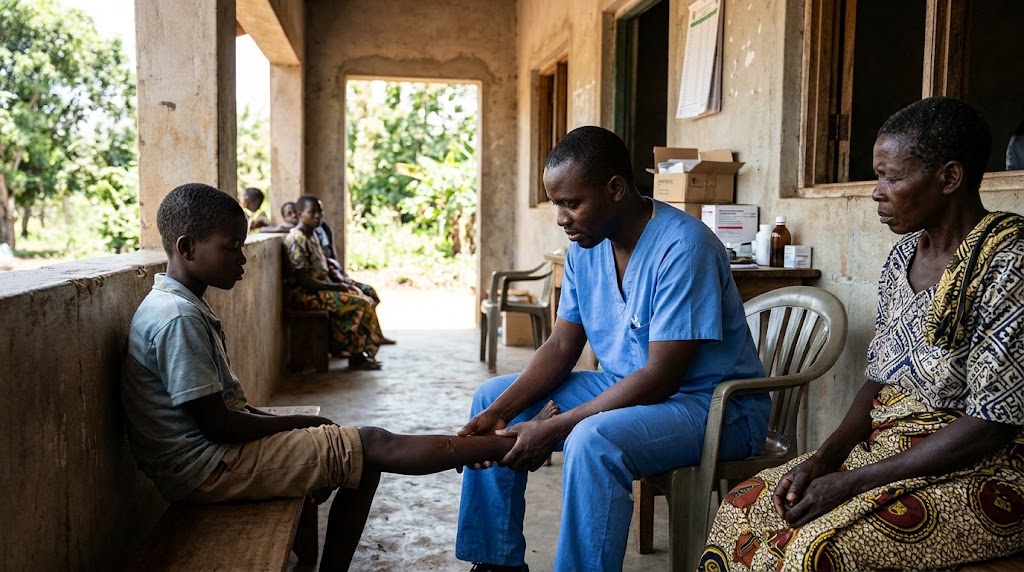
Snakebites are one of the most neglected causes of death in the world. Most victims live in poor rural areas far from hospitals, and more than half of the countries with dangerous snakes do not count bites. A team at the Liverpool School of Tropical Medicine combined data from 79 countries with a statistical model built on climate, snake species and living conditions. They estimated how many people are envenomed and killed each year, including the cases that never reach official records.
Their estimate: between 274,000 and 513,000 people die from snake envenoming every year. At least 2.1 million people are envenomed annually, and the true number could be as high as 7 million. More than 800,000 survivors are left with long-term disabilities each year, including amputations.
Those numbers are far above what has usually been quoted. The World Health Organization has used a figure of roughly 81,000 to 138,000 deaths a year.
“We conclude from our findings that snake envenoming is a public health crisis on a far greater scale than official statistics have shown,” co-author Dileepa Ediriweera, a health data scientist at the Liverpool School of Tropical Medicine, wrote in The Conversation.
The same research group published the first global burden study in 2008, which estimated tens of thousands of deaths a year. The new study updates that work with data from studies published up to March 2025, and with community surveys that capture bites never reported to health systems.
The method matters. Hospital records miss most cases because many victims live hours from the nearest clinic, cannot afford transport or antivenom, or go to traditional healers instead. By comparing hospital data with door-to-door community surveys, the team estimated how much is missed, then used environmental and social factors to fill in countries with no data at all.
The second finding is where the burden falls. Sub-Saharan Africa accounts for about 45% of envenomings and deaths, with Nigeria, the Democratic Republic of Congo and Ethiopia among the hardest-hit countries. People there are envenomed and die at nearly three times the rate seen in south Asia, a burden the authors say has been underestimated for decades.
The reasons are structural. Africa has many dangerous species, including saw-scaled vipers, puff adders, cobras and mambas. Millions of farm workers labor in open fields without protective boots and walk unlit paths at night, and antivenom is often expensive, scarce or absent.
The WHO aims to halve snakebite deaths and disability by 2030. The researchers argue that maps like theirs can show where to stockpile antivenom, train rural health workers and improve transport, so a treatable emergency does not become a death sentence.
There are limits to what this shows. The figures are model-based estimates with wide ranges, not counts, and they depend on the quality of the community surveys and the assumptions built into the model. Countries with almost no data rely heavily on statistical prediction.
Source
Ediriweera DS, et al. PLOS Medicine, 2026.
DOI: 10.1371/journal.pmed.1005201
Also cited
Kasturiratne A, Wickremasinghe AR, de Silva N, et al. “The global burden of snakebite: a literature analysis and modelling based on regional estimates of envenoming and deaths.” PLOS Medicine, 2008.
DOI: 10.1371/journal.pmed.0050218